
What Makes a Wireless Home Theater System Different
Watching a movie at home can be much more enjoyable when the sound feels like it is coming from all around you. A good home theater system can turn an ordinary living room into a more immersive entertainment space. However, traditional home theater setups often come with one common problem: too many wires.
This is where a wireless home theater system can make a difference.
Wireless home theater systems are designed to reduce the amount of visible wiring while giving you better sound than regular TV speakers. They can be a practical choice for modern homes where people want good audio without making the room look crowded with cables.
But what exactly is a wireless home theater system, how does it work, and is it the right choice for your home? Let's take a closer look.
What Is a Wireless Home Theater System?
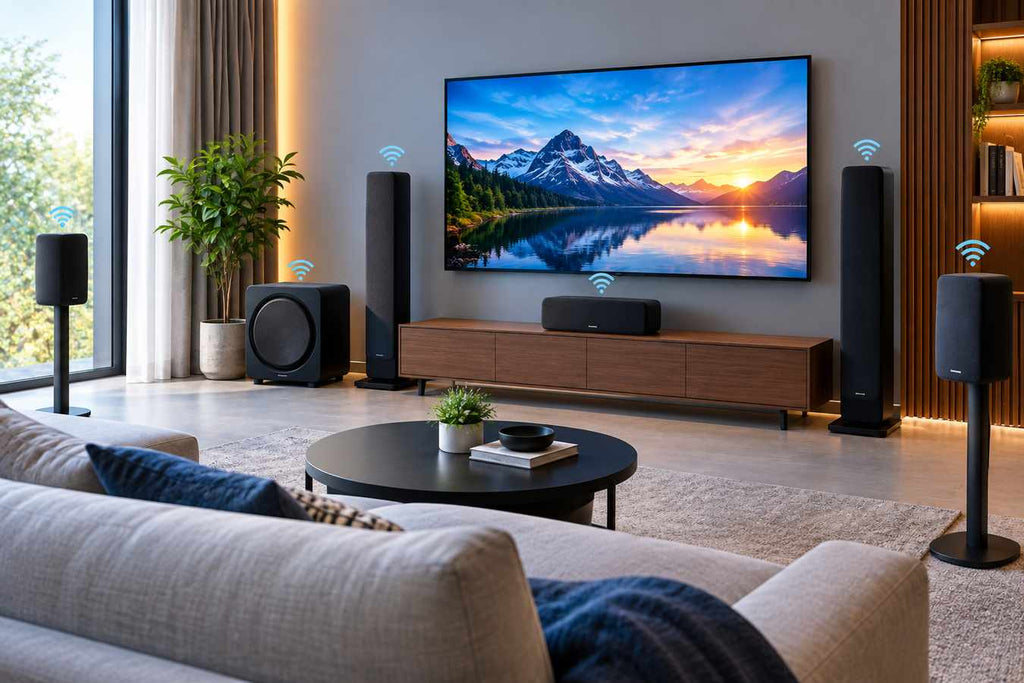
A wireless home theater system is an audio setup that uses wireless technology to connect some of its speakers or components instead of relying entirely on traditional speaker cables.
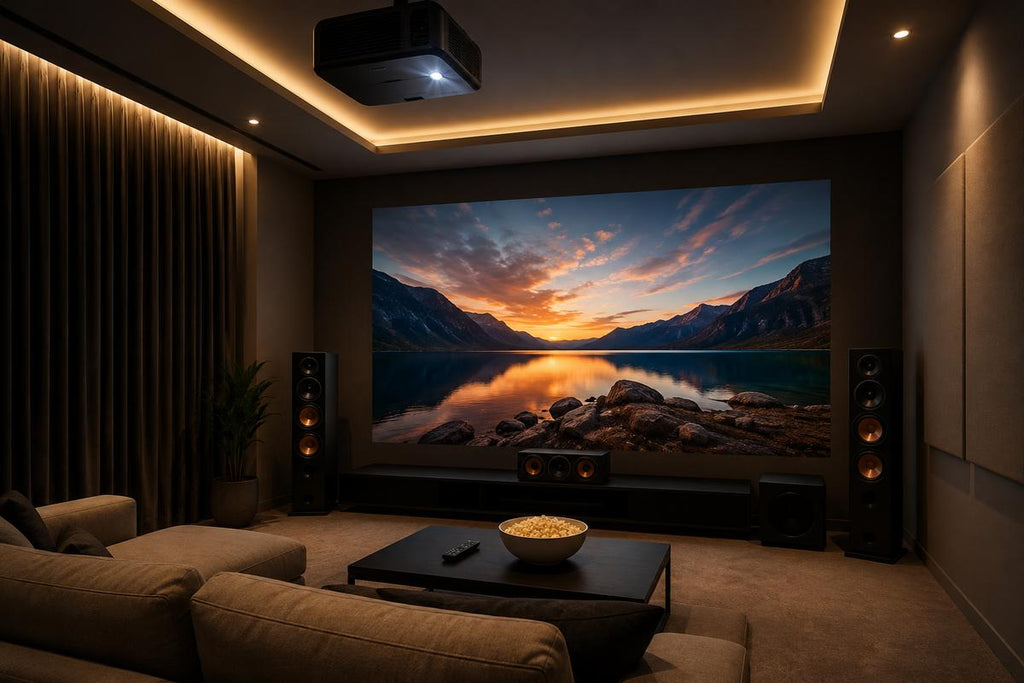
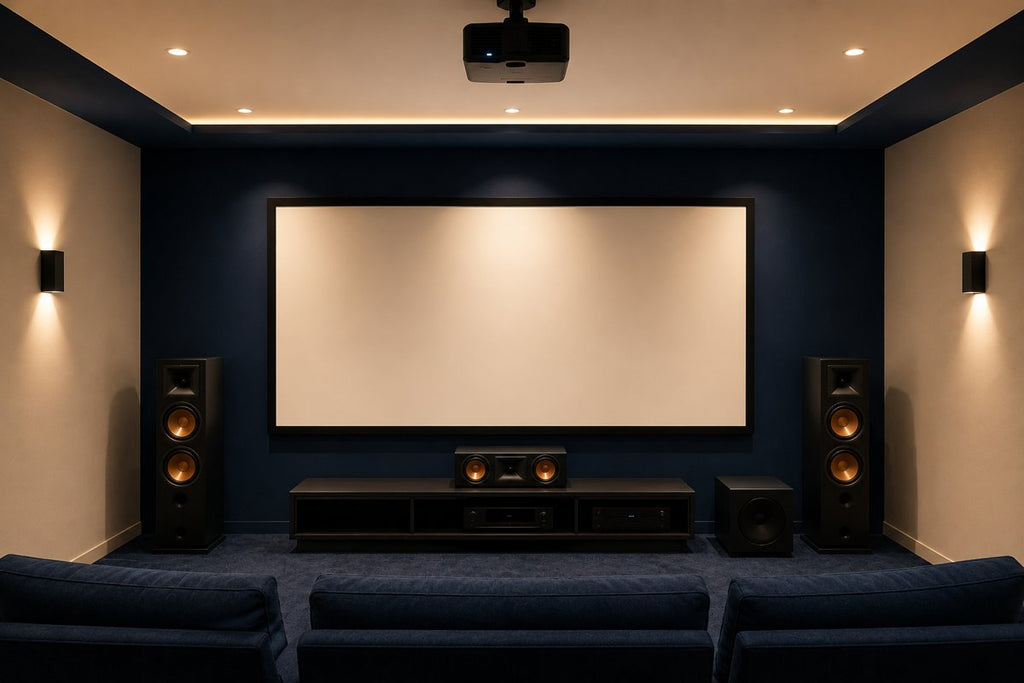
A typical setup can include a center speaker, front speakers, surround speakers, a subwoofer, and an AV receiver or other control unit. Depending on the system, wireless connections may be used for rear speakers or subwoofers, while some components can still require power cables.
It is important to understand that wireless does not always mean completely wire-free. Wireless speakers still need power, so they may need to be connected to an electrical outlet.
The main advantage is that you do not need to run long audio cables across the room from the receiver to every speaker.
Why Choose a Wireless Home Theater System?
The biggest reason people choose wireless home theater systems is convenience.
Traditional speaker setups can require planning before installation. Wires may need to run behind walls, under carpets, along skirting boards, or through specially designed cable channels. This can be difficult if your home is already finished.
A wireless system can make installation simpler.
Cleaner-looking room
Visible cables can make even a well-designed entertainment room look untidy. Wireless surround speakers can help create a cleaner appearance.
This can be especially useful in living rooms where the home theater is also part of the everyday family space.
Easier installation
Installing surround speakers with long cables can take time. Wireless connectivity can reduce the amount of cable routing required.
This does not mean installation is completely effortless, but it can make the overall process easier.
More flexible speaker placement
Wireless rear speakers can give you more freedom when deciding where to place your speakers.
You can position surround speakers based on the seating area instead of worrying as much about how to hide long speaker cables.
Good for modern homes
Many modern homes have open layouts, minimal interiors, and limited options for hiding wires. A wireless home theater can fit better into this type of space.
What Components Do You Need?
A wireless home theater system can have several components, depending on how advanced you want the setup to be.
Front speakers
The front left and right speakers create much of the main sound you hear during movies and music. They help deliver dialogue, music, sound effects, and other important parts of the soundtrack.
Center speaker
The center channel is especially important for movies because it handles much of the dialogue. Clear center-channel performance can make conversations easier to understand.
Surround speakers
Surround speakers create the feeling that sound is coming from different directions. They can make movie effects, background sounds, and action scenes feel more immersive.
Wireless surround speakers can be particularly useful when you want to avoid running cables around the room.
Subwoofer
A subwoofer handles low-frequency sounds such as explosions, deep music, and powerful movie effects.
A good subwoofer can add depth to a home theater and make action scenes feel more exciting.
AV receiver
An AV receiver acts as the control center of many home theater systems. It can connect different sources and process audio for your speakers.
When selecting an AV receiver, it is important to check whether it supports the speaker configuration, audio formats, and wireless technology required by your setup.
Wireless vs Wired Home Theater: Which Is Better?
There is no single answer for everyone.
A wired system can offer excellent reliability and flexibility, particularly for dedicated home theater rooms where cables can be installed properly.
A wireless system can be more convenient for rooms where running cables is difficult or where a clean appearance is important.
For example, if you are building a dedicated cinema room during construction, installing speaker cables inside the walls may be a good option.
On the other hand, if you are upgrading an existing living room, wireless rear speakers can reduce the need for complicated cable installation.
The right choice depends on your room, budget, equipment, and installation requirements.
Does Wireless Mean Lower Sound Quality?
This is one of the most common questions people have.
Wireless technology has improved significantly, and a well-designed wireless system can deliver impressive sound. However, sound quality depends on much more than whether a speaker is wireless or wired.
The speaker design, amplifier, source quality, room acoustics, placement, calibration, and system matching all matter.
A poorly positioned expensive speaker may sound worse than a properly positioned, well-matched speaker in the right room.
For this reason, it is better to look at the complete system rather than choosing equipment simply because it is wireless.
How to Get Better Performance From a Wireless Home Theater
Once you choose your system, proper setup is just as important as the equipment.
Start by positioning the main speakers correctly around the screen and seating area. Surround speakers should be placed to create an even sound field rather than being positioned randomly.
The subwoofer may require some experimentation. Low-frequency sound behaves differently depending on the room, so moving the subwoofer to different locations can sometimes make a noticeable difference.
You should also check the wireless connection between the components and make sure the speakers have a reliable power supply.
Finally, use the receiver's calibration system if your equipment includes one. Automatic room calibration can help adjust speaker levels, distances, and other settings for your room.
Is a Wireless Home Theater Worth It?
For many homeowners, a wireless home theater system can be a practical upgrade.
It is especially useful when you want surround sound but do not want to deal with long speaker cables. It can also be a good choice for apartments, living rooms, renovated spaces, and homes where running new wires is difficult.
However, you should not choose a system based on the word "wireless" alone.
Think about the size of your room, your seating position, the type of movies and music you enjoy, your preferred sound quality, and your budget.
A properly planned system will always perform better than a collection of expensive components that are not matched to the room.
Final Thoughts
A wireless home theater system can bring immersive movie and music experiences to your home while keeping your space cleaner and easier to manage. With the right speakers, subwoofer, AV receiver, placement, and calibration, you can create a setup that feels much closer to a cinema without turning your living room into a maze of cables.
If you are looking for the right combination of home theater speakers, AV receivers, subwoofers, projectors, and other home entertainment components, Melody Home Theater Store can help you choose a system based on your room, requirements, and budget. With the right advice and professional setup, you can create a home theater that sounds great and fits naturally into your home.
Related post
01
Sep