

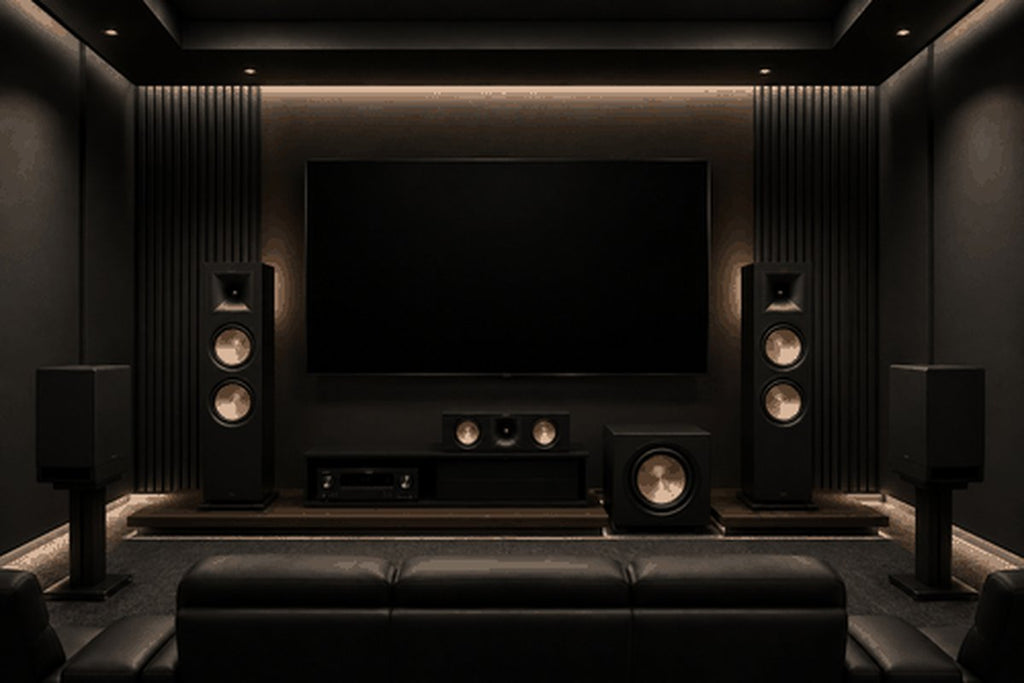
What Are the Components of a Home Theater System?
A home theater system can turn an ordinary living room into a place where movies, sports, music, and games feel much more exciting. But when you start looking at home theater equipment, it is easy to feel confused. There are speakers, AV receivers, projectors, screens, subwoofers, cables, and many other options. So, what do you actually need?
The good news is that you do not need to buy every piece of equipment you see. A good home theater is built by choosing the right components for your room, viewing habits, budget, and sound preferences.
In this guide, we will explain the main components of a home theater system, what each one does, and how they work together to create a better entertainment experience.
Display: TV or Projector and Screen
The display is one of the most noticeable parts of a home theater. It is where you watch movies, shows, sports, and play games.
There are two main choices: a large television or a projector with a screen.
A large 4K TV is a practical choice for smaller rooms. It offers a bright, sharp picture and is usually easy to set up. Modern TVs also come with smart features, making it simple to access streaming services.
A projector is a better option if you want a more cinema-like experience. A 4K projector can create a much larger image than most televisions, making movies feel closer to what you experience in a commercial cinema.
You can also choose an Ultra Short Throw projector if your room does not have much space behind the viewing area. These projectors can sit close to the wall or screen while producing a large image.
The right display depends on your room size, viewing distance, lighting, and the type of experience you want.
Speakers: The Heart of the Sound Experience
A great picture is only half of a home theater. Sound plays an equally important role.
A home theater speaker system usually includes several speakers placed around the room. Each speaker has a specific job.
The center speaker handles most dialogue. This is particularly important because clear voices make movies much easier to follow.
The front left and right speakers provide music, sound effects, and much of the overall soundtrack. They also help create a wide and natural soundstage.
Surround speakers are placed to the sides or behind the seating area. They create the feeling that sound is coming from different directions. For example, if a car moves across the screen, the sound can move around the room with it.
For larger or more advanced systems, additional speakers can be added for overhead or height effects. This can create a more three-dimensional sound experience.
The number of speakers depends on the system you choose. A 5.1 setup, for example, normally includes five main channels and one subwoofer. A 7.1 system adds two more surround channels.
The most important thing is not simply buying more speakers. It is choosing speakers that work well together and positioning them correctly.
Subwoofer: Adding Powerful Bass
A subwoofer is responsible for low-frequency sound, commonly known as bass.
You may not notice the subwoofer during quiet dialogue, but you will definitely notice it during action scenes, explosions, music, and other moments with deep sound effects.
A good subwoofer adds depth to a movie. It can make an explosion feel more powerful, a musical performance feel fuller, and a movie soundtrack feel more immersive.
The size and power of the subwoofer should match the room. A very large subwoofer is not automatically better for every space. In a smaller room, too much bass can become overwhelming or uneven.
Some home theaters use two subwoofers to create more consistent bass throughout the room. This can be particularly useful in larger spaces or rooms with difficult acoustics.
AV Receiver: The Control Center
The AV receiver, or AVR, is one of the most important components in a traditional home theater system.
Think of the AV receiver as the control center. It receives audio and video signals from different sources and sends them to the correct equipment.
For example, you might connect a streaming device, gaming console, Blu-ray player, or set-top box to the receiver. The receiver can then send the video signal to your TV or projector while sending the audio to your speakers.
The receiver also powers passive speakers in many setups. It helps manage surround sound formats and provides connections for different devices.
When choosing an AV receiver, you should consider the number of channels, available HDMI connections, supported audio formats, video features, and the power requirements of your speakers.
It is important to choose an AVR that matches your complete system rather than buying one based only on brand or price.
Source Devices, Cables and Room Setup
Your home theater also needs sources. These are the devices that provide the content you want to watch or listen to.
Common sources include:
-
Streaming devices
-
Smart TV apps
-
Gaming consoles
-
Blu-ray players
-
Set-top boxes
-
Media players
-
Music streaming services
You also need the right cables and connections to transfer audio and video between your equipment. HDMI cables are commonly used for modern home theater connections, while speaker cables connect the receiver or amplifier to passive speakers.
Cable management may not seem exciting, but it makes a big difference. Properly organized cables make the system easier to maintain and give the installation a cleaner appearance.
Room setup is equally important. Even expensive equipment cannot perform at its best if the speakers are poorly positioned or the screen is placed at an uncomfortable viewing angle.
Think about seating position, speaker height, screen size, lighting, and the distance between the viewer and display before installing everything.
Acoustic Treatment and Comfort
Room acoustics are often overlooked when people build a home theater.
Sound behaves differently in every room. Hard walls, glass, floors, and ceilings can reflect sound, while furniture, curtains, carpets, and other soft materials can absorb it.
You do not always need to completely redesign your room. Simple changes can help improve the listening environment. Curtains, rugs, furniture, and acoustic panels can reduce unwanted reflections and make dialogue and music clearer.
Seating is another important part of the experience. Your viewing position should provide a comfortable angle to the screen and allow you to hear the speakers properly.
Lighting also matters. If you are using a projector, excessive light can reduce picture quality. Blackout curtains or controlled lighting can help create a better viewing environment.
A home theater should not only sound and look good. It should also be comfortable enough that you can sit back and enjoy a full movie without distractions.
How Do All These Components Work Together?
The real magic of a home theater comes from how all the components work together.
Imagine watching a movie. Your streaming device provides the content. The AV receiver processes the audio and video signals. The projector or TV displays the picture. The front and center speakers reproduce dialogue and main sounds. Surround speakers create sounds around you, while the subwoofer adds deep bass.
When these components are properly matched and installed, the result feels much more immersive than simply watching a movie on a television with built-in speakers.
This is why buying individual products without considering the complete system can sometimes lead to disappointing results. The equipment should work as one balanced setup.
Conclusion
Building a home theater does not have to mean buying the most expensive equipment available. The goal is to create a system that fits your room, your entertainment needs, and your budget.
The main components include a TV or projector and screen, speakers, a subwoofer, an AV receiver, source devices, cables, and the right room setup. Each component has a different role, but they all need to work together to deliver the best experience.
If you are planning a home theater and are unsure which components are right for your space, Melody Home Theater Store can help you choose and build a complete setup. With the right equipment, careful planning, and professional installation, you can enjoy a cinema-like experience in the comfort of your own home.
Related post


08
Oct


