

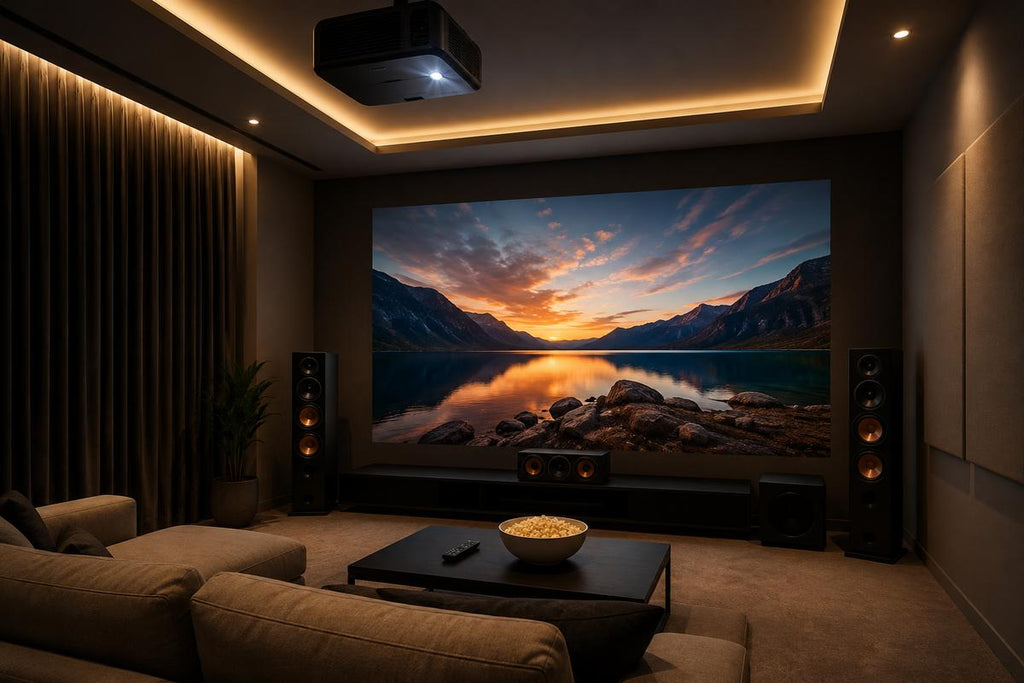
How to Choose the Right Home Theatre Projector
A home theatre projector can completely change the way you watch movies, sports, and shows at home. Instead of watching everything on a standard TV screen, you can create a much larger viewing experience that feels closer to a real cinema.
But choosing the right home theatre projector is not always simple. There are different resolutions, brightness levels, projector technologies, screen sizes, and installation options to consider.
Whether you are planning a dedicated home cinema or want a projector for your living room, understanding the basics can help you make the right choice.
What Is a Home Theatre Projector?
A home theatre projector is designed to display movies, TV shows, sports, gaming content, and other entertainment on a large screen or wall.
Unlike business projectors, which are mainly designed for presentations, home cinema projectors focus more on picture quality, colour accuracy, contrast, resolution, and smooth motion.
A good home theatre projector can produce a screen size of 100 inches, 120 inches, or even larger, depending on the room and projector setup.
For people who want a true cinema-style experience at home, a projector can be an excellent choice.
Why Choose a Projector Instead of a TV?
The biggest advantage of a projector is screen size.
A large TV can be expensive, especially when you move beyond 75 or 85 inches. A projector can create a much larger image without requiring a huge television panel.
A home theatre projector is also useful when you want a dedicated cinema room. Combined with a good projector screen, comfortable seating, and a surround sound system, it can create an immersive movie-watching environment.
Projectors are especially popular for:
• Movies and streaming
• Sports and live events
• Gaming
• Family entertainment
• Dedicated home cinema rooms
• Large-screen presentations at home
4K Projector or Full HD Projector?
Resolution is one of the first things you should consider when buying a home theatre projector.
A Full HD projector offers 1920 × 1080 resolution and can still deliver a good picture, especially for casual viewing.
A 4K projector provides much greater detail and is a better option for large screens. The difference becomes easier to notice when you sit closer to the screen or use a screen size of 100 inches or more.
If you regularly watch 4K movies and streaming content, investing in a 4K projector can make sense.
For a premium home cinema setup, 4K resolution combined with HDR can provide sharper images, better detail, and a more cinematic viewing experience.
Laser Projector vs Lamp Projector
Projector technology has also changed significantly.
Traditional lamp projectors use a lamp as their light source. They can offer good picture quality but the lamp eventually needs replacement.
Laser projectors use a laser light source and have become increasingly popular for modern home theatre setups.
Some advantages of laser projectors include:
• Long-lasting light source
• Consistent brightness
• Quick startup
• Lower maintenance
• Excellent picture quality
A laser projector can be particularly useful if you plan to use your home theatre regularly.
How Bright Should a Home Theatre Projector Be?
Brightness is measured in lumens, but choosing the highest number is not always the right approach.
The ideal brightness depends on your room.
A dedicated dark home cinema can work well with a projector designed for controlled lighting. A living room with windows and ambient light may require a brighter projector.
Before choosing a projector, consider:
• Room size
• Amount of natural light
• Screen size
• Wall and room colours
• Viewing time
• Whether curtains or blackout blinds are available
For the best movie experience, controlling the amount of light in the room can be just as important as projector brightness.
Choosing the Right Projector Screen
A projector and screen should be considered together.
While you can project onto a plain wall, a proper projector screen can provide better image consistency, contrast, and overall presentation.
Screen size should depend on your viewing distance and room dimensions.
Common home theatre screen sizes include:
• 100 inches
• 110 inches
• 120 inches
• 135 inches
• 150 inches and larger
The right size is not necessarily the biggest size possible. The goal is to create a comfortable image that allows you to enjoy movies without constantly moving your eyes around the screen.
Standard Projector or Ultra Short Throw Projector?
If you have limited space, an Ultra Short Throw projector can be an interesting option.
A UST projector can create a large image while sitting very close to the wall or screen. This makes it suitable for many living rooms where there is not enough space to install a traditional projector at the back of the room.
A standard home theatre projector usually requires more distance between the projector and screen.
Your choice depends on the room layout, screen size, viewing habits, and installation requirements.
Don't Forget the Sound
Sound plays a major role in making movies feel immersive.
For a complete setup, you can combine your home theatre projector with an AV receiver, centre channel speaker, front speakers, surround speakers, and a subwoofer.
If you want an even more immersive experience, Dolby Atmos can add height effects to your sound system.
The combination of a large projected image and properly positioned surround speakers can make a movie night feel much more like a cinema experience.
What Should You Look for in a Home Theatre Projector?
Before buying, compare the features that actually matter for your room.
Look at:
• Resolution
• Brightness
• Contrast
• HDR support
• Laser or lamp technology
• Throw distance
• HDMI connectivity
• Refresh rate
• Installation options
• Projector screen compatibility
It is also important to consider how you will use the projector. A projector mainly used for movies may have different requirements from one used for gaming or sports.
Create Your Own Cinema at Home
A home theatre projector can be the centrepiece of a great entertainment setup. With the right projector, screen, speakers, AV receiver, and room arrangement, you can create a viewing experience that is much more immersive than a regular television.
There is no single projector that is perfect for every home. The best choice depends on your room, screen size, lighting conditions, budget, and entertainment needs.
If you are looking for the right home theatre projector for your space, Melody House can help you choose a suitable audio and video setup. With experience in home theatre solutions, Melody can help you plan everything from the projector and screen to speakers and complete home theatre installation.
Related post


08
Oct


