

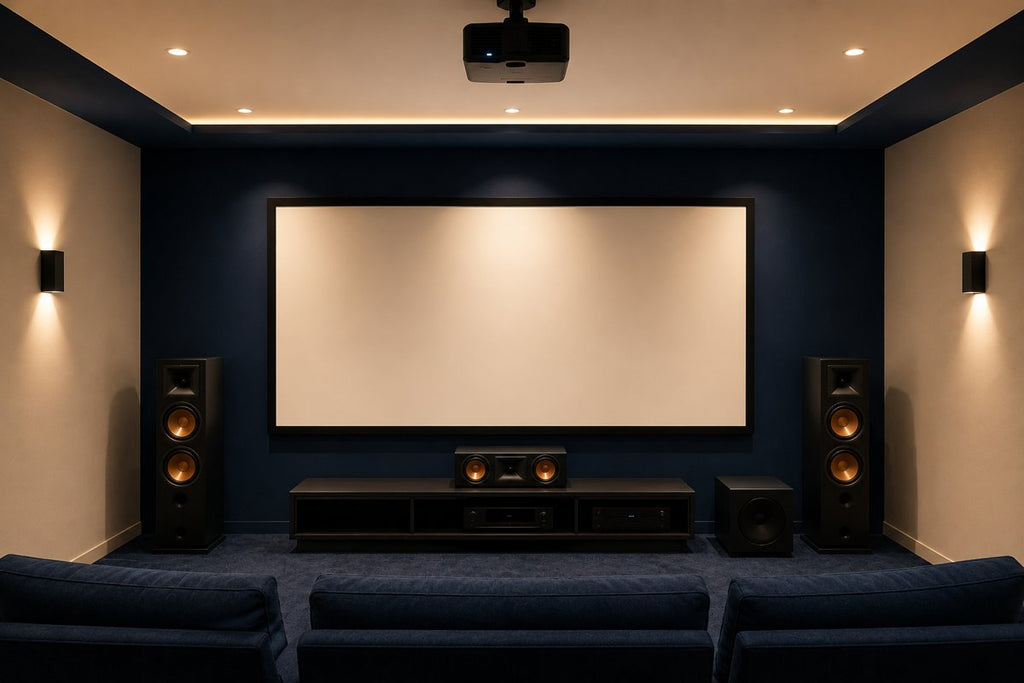
How to Build a Home Cinema System
Watching a movie at home can be much more enjoyable when you have the right sound and picture. A good home cinema system can turn an ordinary living room or dedicated room into a place where movies, sports, music, and games feel more exciting.
You do not always need a huge room or an extremely expensive setup. The key is choosing the right equipment for your space and putting everything together correctly.
From the screen and projector to speakers and an AV receiver, every part has a role. Here is a simple guide to help you build a home cinema system at home.
Choose the Right Room
Before buying any equipment, look at the room where you want to build your home cinema.
A dedicated room is ideal because you can control the lighting, seating, sound, and screen placement. However, a living room can also work very well.
Consider these points:
• Room size and shape
• Natural light from windows
• Wall and ceiling height
• Available seating space
• Power outlets
• Where equipment can be installed
Try to avoid placing your main screen directly opposite a large window. Too much light can reduce the quality of the projected image.
If you are using a living room, blackout curtains can help create a better movie-watching environment.
Decide Between a TV and Projector
The display is one of the most important parts of a home cinema system.
A large 4K TV is convenient and works well in rooms with a lot of ambient light. It requires very little installation and is easy to use every day.
A projector is a better choice if you want a much larger image and a more traditional cinema experience.
A home cinema projector can create a screen size of 100 inches, 120 inches, or more. A 4K projector can provide excellent detail, especially when paired with a suitable projector screen.
You can also consider a laser projector for long-term use and lower maintenance. If your room has limited space, an Ultra Short Throw projector can create a large image while sitting close to the screen or wall.
Think about your room and viewing habits before choosing.
Select the Right Projector Screen
If you choose a projector, do not overlook the screen.
While projecting onto a plain wall is possible, a proper projector screen can provide a more consistent image and better viewing experience.
Screen size should match the room and your seating distance. Bigger is not always better. If the screen is too large for the viewing distance, you may find it uncomfortable to watch.
Common home cinema screen sizes include 100, 110, 120, and 135 inches.
Your projector's throw distance should also match the screen size. Check the projector specifications before installing anything permanently.
Build the Right Speaker System
The picture gets your attention, but the sound makes the experience feel real.
A proper home cinema speaker system can create the feeling of sound coming from different directions.
A basic 5.1 setup includes:
• Left speaker
• Centre speaker
• Right speaker
• Two surround speakers
• One subwoofer
A 7.1 setup adds two more surround speakers for a wider sound field.
For an even more immersive experience, you can choose Dolby Atmos. An Atmos setup adds height channels, allowing compatible soundtracks to create sounds that appear to come from above.
The centre speaker is particularly important because it handles much of the dialogue in movies. It should ideally be positioned close to the centre of the screen.
Add a Good AV Receiver
The AV receiver is the control centre of many home cinema systems.
It connects your different sources and sends the correct audio signals to your speakers. It can also process surround sound formats such as Dolby Atmos and DTS.
When choosing an AV receiver, consider:
• Number of channels
• HDMI inputs and outputs
• Dolby Atmos support
• 4K and HDR support
• Gaming features
• Streaming options
• Room calibration features
Do not simply buy the receiver with the highest number of channels. Choose one that matches your current speakers and any future upgrades you may want.
Add a Subwoofer
If you want powerful movie sound, a subwoofer can make a major difference.
Regular speakers handle most of the music, dialogue, and effects, while a subwoofer is designed to reproduce deep bass.
Explosions, engines, music beats, and other low-frequency effects can feel much more powerful with a properly matched subwoofer.
Room size matters when choosing a subwoofer. A small room may not need an extremely large model, while a larger dedicated cinema room may benefit from more powerful bass.
Proper placement is also important because bass can sound very different depending on where the subwoofer is positioned.
Position Your Speakers Correctly
Even expensive speakers will not sound their best if they are placed incorrectly.
The left and right front speakers should be positioned on either side of the screen. The centre speaker should be close to the screen and aimed toward the main listening position.
Surround speakers should be positioned around the seating area to create a balanced sound field.
If you are using Dolby Atmos speakers, the height channels need careful positioning as well.
Try to keep the main listening position reasonably centred between the speakers. This helps create a more balanced surround experience.
Think About Room Acoustics
Your room has a major effect on sound quality.
Hard surfaces such as bare walls, glass, and tiled floors can reflect sound and create unwanted echoes. Soft furnishings such as carpets, curtains, sofas, and acoustic panels can help control reflections.
You do not need to cover every wall with acoustic material.
Start by identifying obvious problems such as excessive echo or harsh sound. Then make simple improvements where needed.
A well-treated room can make your existing equipment sound noticeably better.
Choose Comfortable Seating and Lighting
A home cinema is not only about technology.
Comfortable seating is important, especially if you regularly watch long movies or series.
Try to position the main seating area at a comfortable distance from the screen. Avoid placing seats too close to large speakers or directly against walls when possible.
Lighting also matters. Bright lights can distract you and reduce the impact of a projected image.
Use dimmable lights or indirect lighting. Blackout curtains are especially useful if you use a projector during the day.
Connect and Calibrate Everything
Once all your equipment is installed, take some time to set it up properly.
Connect your source devices, such as a streaming device, Blu-ray player, gaming console, or set-top box, to the AV receiver or display as required.
Then run the receiver's room calibration system if it has one.
Check the speaker levels, distances, crossover settings, projector focus, screen alignment, and picture settings.
Do not judge the system only by how it sounds or looks immediately after installation. Small adjustments can make a noticeable difference.
Build a System That Fits Your Needs
You do not have to buy everything at once.
You can start with a good display, AV receiver, front speakers, centre speaker, surround speakers, and subwoofer, then upgrade individual components later.
For example, you may begin with a 5.1 system and eventually move to Dolby Atmos. You can also upgrade the projector, add better speakers, or improve room acoustics over time.
The best home cinema system is not necessarily the most expensive one. It is the one that works well for your room, budget, and entertainment needs.
Conclusion
Building a home cinema system at home can be a rewarding project. With the right projector or TV, speakers, AV receiver, subwoofer, and room setup, you can create an enjoyable cinema experience without leaving your house.
Start by understanding your room and decide what you want from the system. Then choose equipment that works together instead of buying individual products without considering the complete setup.
If you are planning a home cinema in India, Melody House can help you choose the right audio and video equipment for your space. From projectors and screens to speakers, AV receivers, subwoofers, and complete home theatre installation, the right guidance can help you create a system that sounds and looks great for years to come.
Related post


08
Oct


