
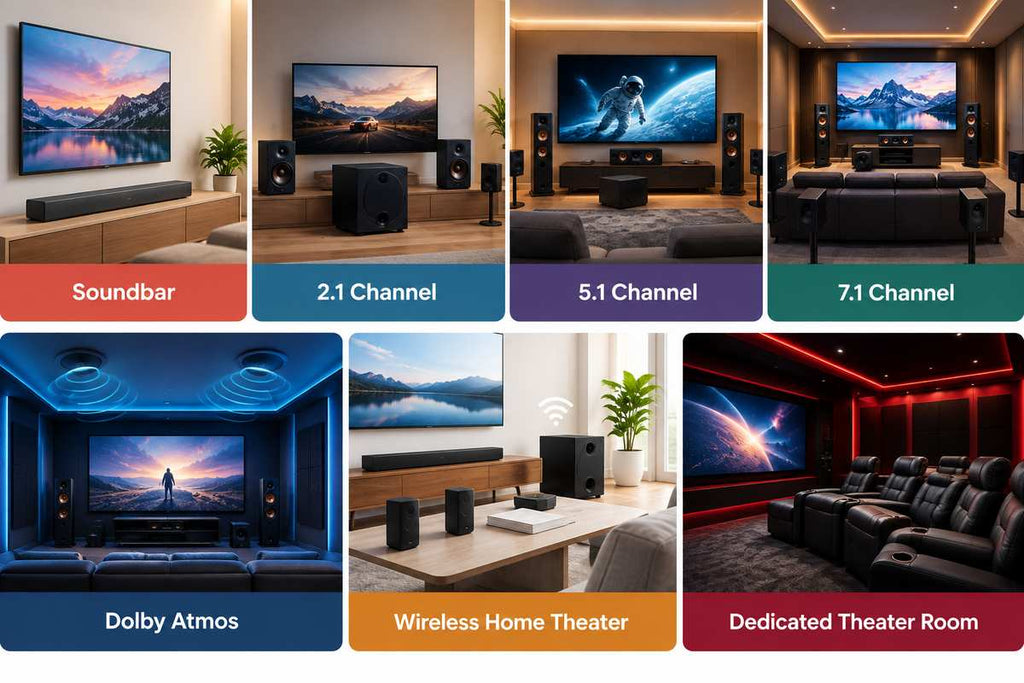
Types of Home Theater Systems and Which Type Is Best for Your Home?
A home theater system can transform your living space into an exciting entertainment environment where you enjoy movies, sports, gaming, and music with immersive sound and stunning visuals. However, with different types of home theater setups available, choosing the right one can be challenging.
From traditional surround sound systems to wireless home theaters and dedicated theater rooms, each option offers unique benefits depending on your space, budget, and entertainment preferences.
In this guide, we will explore the different types of home theater systems, their advantages, and which type is best for your home.
What Is a Home Theater System?
A home theater system is a combination of audio and visual equipment designed to recreate the movie theater experience at home. It typically includes a television or projector, speakers, an audio/video receiver, and media sources.
Modern home theater systems range from compact soundbar setups to advanced multi-speaker installations with projectors and surround sound. The best choice depends on your room size, budget, and desired viewing experience.
Types of Home Theater Systems
Soundbar Home Theater System
A soundbar home theater system is a compact and convenient option for improving your television's audio. It usually consists of a soundbar placed beneath the TV, with some models offering a wireless subwoofer and additional rear speakers.
Key Features:
-
Compact design suitable for small spaces.
-
Easy installation and setup.
-
Improved dialogue clarity compared with many built-in TV speakers.
-
Wireless connectivity in many models.
Best For: Apartments, bedrooms, and users who want better sound without installing multiple speakers.
2.1 Channel Home Theater System
A 2.1-channel system includes two main speakers and one subwoofer. The left and right speakers deliver stereo sound, while the subwoofer produces deeper bass.
This setup is suitable for watching movies, listening to music, and gaming without the complexity of a surround sound system.
Advantages:
-
Simple installation.
-
Dedicated bass through the subwoofer.
-
Requires less space than larger speaker configurations.
-
Suitable for music and everyday entertainment.
Best For: Small to medium-sized rooms and users who prioritize clear stereo audio with enhanced bass.
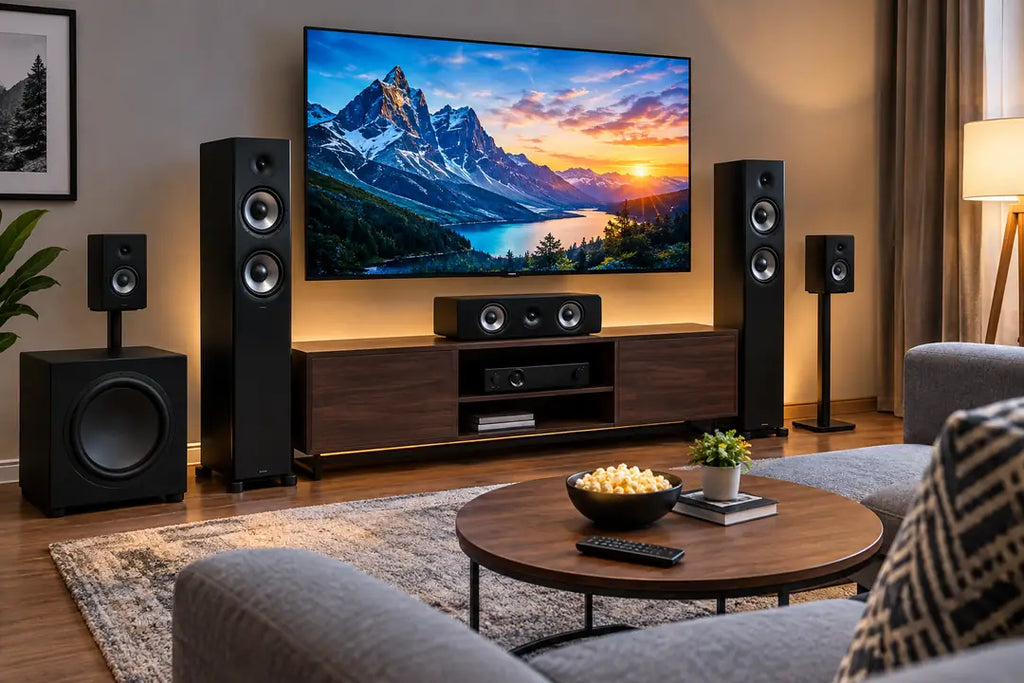
5.1 Channel Surround Sound System
A 5.1-channel home theater system is one of the most common traditional surround sound configurations. It includes five main audio channels and one subwoofer.
The setup generally consists of:
-
Left and right front speakers.
-
A center speaker for dialogue.
-
Two surround speakers.
-
One subwoofer for low-frequency effects.
A properly positioned 5.1 system can create a more immersive audio experience, making movie soundtracks, action scenes, and gaming more engaging.
Best For: Families and movie enthusiasts who want genuine surround sound in a medium-sized room.
7.1 Channel Home Theater System
A 7.1-channel system expands on the traditional 5.1 configuration by adding two additional surround speakers. This can improve sound distribution and create a wider surround experience in suitable rooms.
It typically includes:
-
Three front speakers.
-
Four surround speakers.
-
One subwoofer.
Advantages:
-
Expanded surround sound coverage.
-
More flexibility for larger rooms.
-
Suitable for compatible movie soundtracks and gaming content.
Best For: Larger entertainment rooms and users who want a more extensive speaker setup.
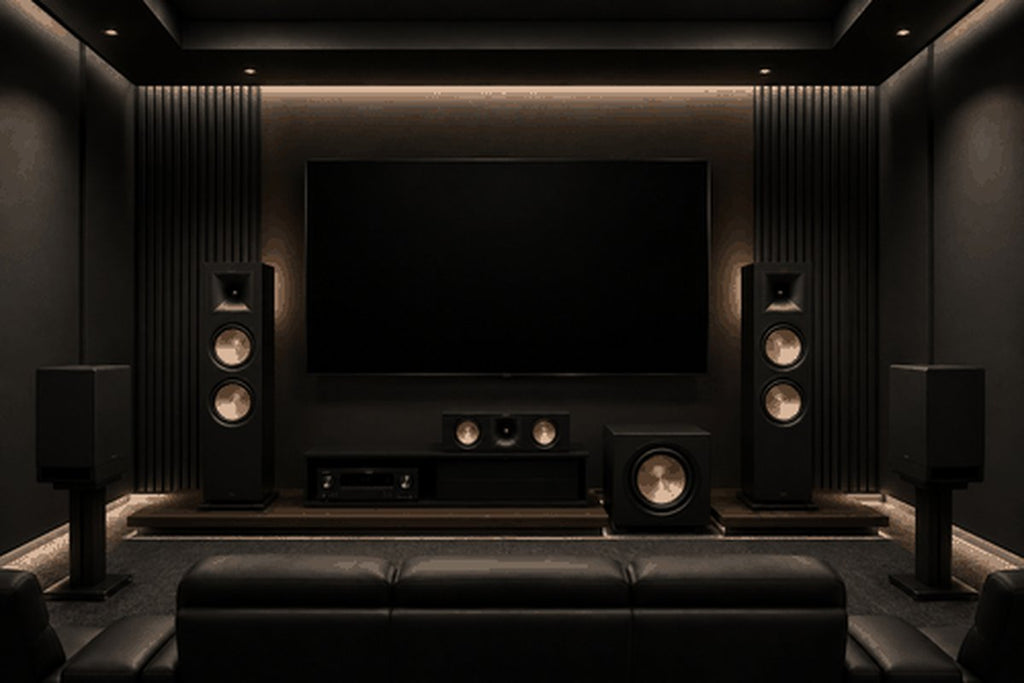
Dolby Atmos Home Theater System
A Dolby Atmos home theater system adds height effects to compatible audio content, creating a three-dimensional sound experience. Sound can appear to come from above as well as around the listener.
Dolby Atmos setups can include ceiling-mounted speakers, upward-firing speakers, or other compatible configurations.
Key Benefits:
-
Immersive three-dimensional sound.
-
Enhanced movie and gaming experiences with compatible content.
-
Flexible speaker configurations.
-
Suitable for dedicated entertainment spaces.
Best For: Home theater enthusiasts seeking immersive audio and willing to invest in additional equipment and installation.
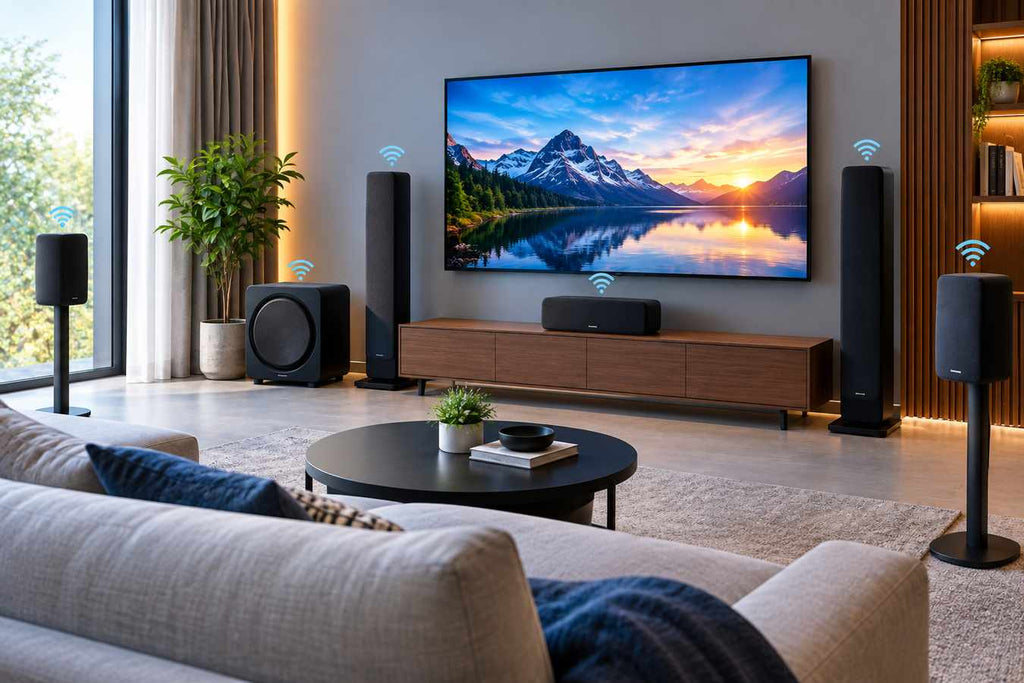
Wireless Home Theater System
Wireless home theater systems use wireless connections for some speakers, reducing the need for long audio cables. Depending on the model, the main components may still require power cables and wired connections.
These systems are available in soundbar-based and multi-speaker configurations.
Advantages:
-
Cleaner installation.
-
Flexible speaker placement.
-
Convenient for rooms where running speaker cables is difficult.
-
Available in different price ranges.
Best For: Users who want a convenient setup with reduced cable clutter.
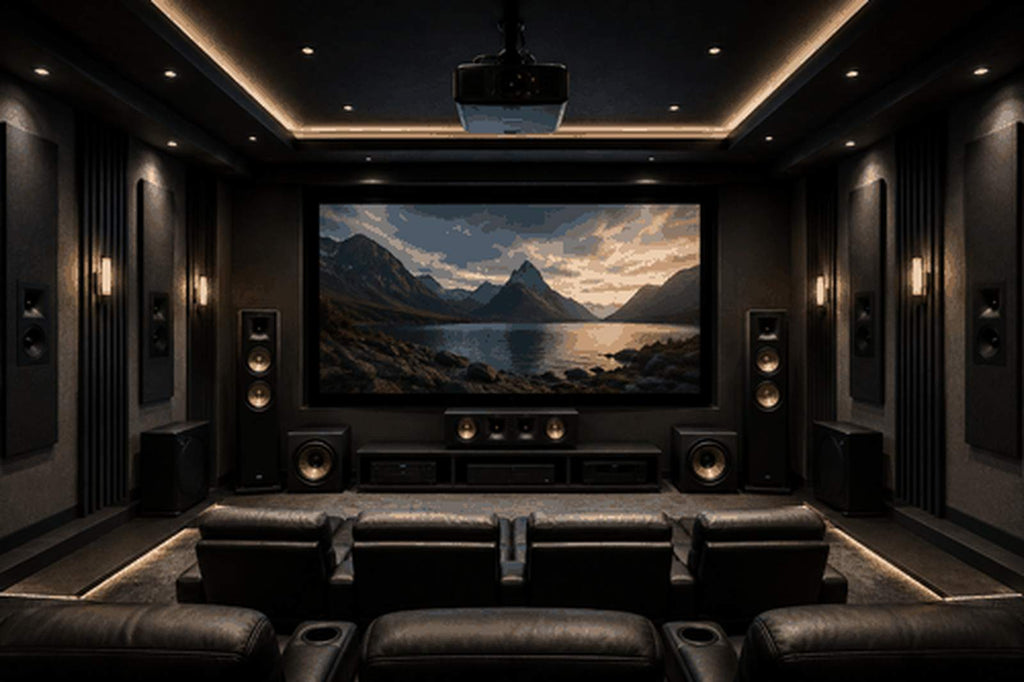
Dedicated Home Theater Room
A dedicated home theater room is designed specifically for watching movies and enjoying entertainment. It may include a projector, large screen, surround sound, acoustic treatments, theater seating, and controlled lighting.
This type of setup offers greater customization and the opportunity to create a cinema-style environment.
Advantages:
-
Customizable room design.
-
Improved control over lighting and acoustics.
-
Large-screen viewing experience.
-
Flexible audio and seating arrangements.
Best For: Homeowners with sufficient space and a budget for a specialized entertainment room.
Which Type of Home Theater Is Best?
The best home theater system depends on your room size, budget, audio preferences, and intended use. There is no single setup that is ideal for every household.
Here is a general comparison:
|
Home Theater Type |
Best For |
|
Soundbar |
Small rooms and simple setups |
|
2.1 Channel |
Stereo sound and enhanced bass |
|
5.1 Channel |
Balanced surround sound for movies |
|
7.1 Channel |
Larger rooms and expanded surround |
|
Dolby Atmos |
Immersive 3D audio |
|
Wireless Home Theater |
Flexible installation |
|
Dedicated Theater Room |
Premium cinema-style experience |
| Others | Budget Friendly |
Best for Small Rooms: Soundbar System
A soundbar is often a practical option for bedrooms, apartments, and smaller living rooms. It requires less space and is generally easier to install.
Best for Balanced Surround Sound: 5.1 Channel
A 5.1-channel system provides a practical balance between immersive sound, equipment requirements, and room compatibility. It is a strong option for users who want traditional surround sound without a highly complex installation.
Best for Immersive Audio: Dolby Atmos
If your priority is three-dimensional sound and you have the budget and room configuration to support it, a Dolby Atmos system can provide a more immersive experience with compatible content.
Best for a Premium Experience: Dedicated Theater Room
A dedicated home theater room allows you to customize the display, audio, acoustics, lighting, and seating. It is suited to homeowners seeking a specialized cinema environment.
Factors to Consider When Choosing a Home Theater
Before purchasing a home theater system, consider the following factors.
1. Room Size
Your room size influences speaker placement, listening distance, and display selection. A compact setup may be sufficient for a small room, while larger spaces may accommodate more speakers.
2. Budget
Home theater systems are available at various price points. Consider the cost of speakers, receivers, displays, installation, and potential upgrades.
3. Audio Quality
Decide whether you prefer stereo sound, traditional surround sound, or immersive audio with height effects. Your preferred experience will help determine the appropriate configuration.
4. Installation Requirements
Wired systems may require cable routing and speaker placement, while wireless options can simplify some aspects of installation. Check power requirements and device compatibility before purchasing.
5. Display Type
Choose between a television and projector based on room lighting, screen size, viewing distance, and budget. A projector may be suitable for large-screen viewing, while a television can offer convenience and strong performance in bright rooms.
6. Smart Features and Compatibility
Check whether your system supports the devices and services you use, such as streaming platforms, gaming consoles, Bluetooth, HDMI connections, and compatible surround sound formats.
How to Improve Your Home Theater Experience
Choosing the right equipment is only one part of creating a great home theater. Proper speaker placement and room acoustics can significantly affect the listening experience.
-
Position the center speaker to improve dialogue clarity.
-
Place surround speakers according to the manufacturer's recommendations.
-
Avoid blocking speakers with furniture.
-
Manage excessive room reflections with suitable acoustic treatments.
-
Calibrate the audio system when supported.
-
Select a display size appropriate for your viewing distance.
These adjustments can help you get better performance from your existing equipment.
Conclusion
Home theater systems are available in different configurations, from compact soundbars to advanced Dolby Atmos setups and dedicated cinema rooms. Each type offers specific benefits based on room size, budget, installation requirements, and entertainment goals.
For many users, a 5.1-channel system provides a balanced surround sound experience, while Dolby Atmos and dedicated theater rooms offer additional options for immersive entertainment. The right choice depends on your individual requirements and the space available in your home.
Before investing in a home theater system, compare different configurations, evaluate your room, and select equipment that meets your audio and visual expectations.