

How to Get Cinema Hall Like Sound Effects at Home
Watching a movie at home can be much more exciting when the sound feels like it is coming from a cinema hall. Clear voices, deep bass, powerful effects, and sound coming from different directions can make a normal living room feel more like a private cinema.
The good news is that you do not always need a huge room or a complicated setup to get a cinema hall like sound at home. The right speakers, AV receiver, subwoofer, room setup, and sound settings can make a big difference.
This guide explains how to get cinema hall sound effects at home and what you should consider before buying or installing a home theater system.
Start With the Right Speaker System
Speakers are the most important part of a home theater sound system. A television's built in speakers can work for everyday viewing, but they cannot create the same wide and powerful sound as a proper speaker setup.
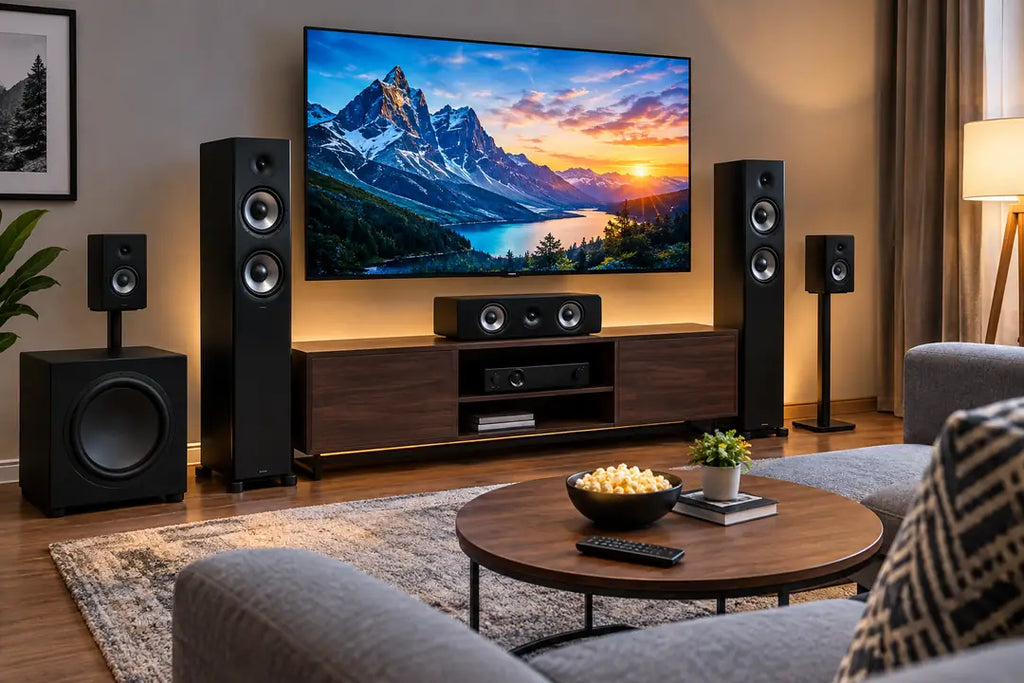
A basic home theater system can include:
-
Front left and right speakers
-
A center speaker
-
Surround speakers
-
A subwoofer
-
An AV receiver
-
Ceiling or height speakers for Dolby Atmos
Each speaker has a different job.
The front speakers handle music, sound effects, and much of the main movie audio. The center speaker is especially important for dialogue. It helps voices sound clear and stay focused around the screen.
Surround speakers create sound from the sides and rear of the room. They are useful for effects such as cars moving behind you, people walking around, rain, crowd noise, and action scenes.
A subwoofer handles deep bass. Explosions, thunder, engine sounds, and music can feel much more powerful when a good subwoofer is added.
Add a Center Speaker for Clear Dialogue
One common problem with home movie sound is unclear dialogue.
You may find yourself increasing the volume just to understand what the actors are saying. Then an action scene starts and the sound suddenly becomes too loud.
A dedicated center speaker can help solve this problem.
The center speaker should normally be placed close to the middle of the screen. If you have a projector and large screen, it can be positioned below or above the screen depending on the room and installation.
A properly placed center speaker makes conversations easier to hear without needing to turn the whole system up.
Use Surround Speakers for a Cinema Feel
Cinema sound is not only about loudness. It is also about where the sound comes from.
In a cinema hall, sound can come from the front, sides, rear, and above you. This creates a feeling that you are inside the movie instead of simply watching it.
You can create a similar effect at home with surround speakers.
For example, during an action movie, you might hear:
-
A car moving from the front to the rear
-
Rain coming from different directions
-
An aircraft passing overhead
-
People talking around you
-
Music spreading across the room
-
Action effects coming from behind your seating position
This is why a proper surround system can feel much more immersive than a soundbar or TV speakers.
Consider Dolby Atmos for Sound From Above
If you want a more advanced cinema experience, Dolby Atmos can add another layer to your home theater.
Traditional surround sound mainly places audio around you. Dolby Atmos can also create the feeling of sound coming from above.
Height or ceiling speakers can be used for this purpose.
For example, when a helicopter flies overhead in a movie, the sound can appear to move through the room rather than staying at ear level.
You do not necessarily need a very large room for Dolby Atmos. The number and type of speakers should be selected according to your room size, ceiling, seating position, and budget.
Do Not Ignore the Subwoofer
A home theater can have excellent speakers and still feel less exciting without enough low bass.
This is where the subwoofer becomes important.
A subwoofer is designed to reproduce low frequency sounds that regular speakers may not handle as effectively.
You can feel the difference during:
-
Explosions
-
Action scenes
-
Thunder
-
Car engines
-
Large musical performances
-
Movie scores
However, more bass does not always mean better sound.
If the subwoofer is too powerful for the room or is poorly positioned, the bass can become boomy and uncomfortable.
The goal is deep and controlled bass that supports the rest of the system.
Choose the Right AV Receiver
The AV receiver is the central part of many home theater systems.
It connects your different audio and video components and sends the correct sound to each speaker.
When choosing an AV receiver, check which surround formats it supports and how many speaker channels it can handle.
You should also consider:
-
HDMI connections
-
4K and HDR support
-
Dolby Atmos support
-
DTS support
-
Room correction features
-
Power requirements
-
Number of channels
Do not select an AV receiver only because it has a high power number. It needs to work well with the speakers you choose.
A properly matched receiver and speaker system can provide better performance and easier control.
Speaker Placement Makes a Big Difference
Even expensive speakers may not sound their best when they are placed incorrectly.
Speaker placement is one of the easiest ways to improve a home theater.
The front left and right speakers should create a balanced soundstage around the screen. The center speaker should be close to the screen and aimed toward the main listening position.
Surround speakers should be positioned around the seating area rather than directly in front of the viewer.
If you have height speakers, their position should also be planned according to the room and Dolby Atmos layout being used.
Try to keep the main listening position centered between the left and right sides of the room whenever possible.
Improve the Room Acoustics
Your room itself can change how your home theater sounds.
Hard walls, glass windows, bare floors, and large empty surfaces can reflect sound. This can make voices less clear and create unwanted echoes.
You do not need to turn your room into a professional recording studio.
Simple changes can help.
Curtains, carpets, rugs, sofas, and other soft furnishings can reduce some reflections. Furniture can also help prevent the room from sounding too empty.
For a dedicated theater room, acoustic panels and other sound treatment can be considered.
The goal is not to remove every reflection. It is to control unwanted sound reflections so your speakers sound clearer.
Calibrate Your Home Theater
After installing the speakers, the system should be properly calibrated.
Many modern AV receivers include automatic room calibration. A microphone measures how the speakers sound from the listening position and adjusts different settings.
Calibration can help with:
-
Speaker distance
-
Speaker volume
-
Bass levels
-
Crossover settings
-
Sound balance
-
Room correction
You can also make small adjustments after automatic calibration if needed.
This step is often overlooked, but it can make a noticeable difference.
Use High Quality Movie Audio
Your equipment can only reproduce the audio that it receives.
If you want the best possible cinema experience, use movies and shows that offer high quality surround sound formats.
Streaming services, Blu ray discs, and other sources may offer different audio formats depending on the title and subscription.
When available, choose the highest quality audio option supported by your equipment.
If your movie has a surround or Dolby Atmos audio track, your compatible home theater can use those channels to create a more immersive experience.
Match the System to Your Room
You do not need the biggest speakers available.
A good home theater should be designed around the room.
A small room may work well with a compact speaker system and smaller subwoofer. A medium or large room may benefit from larger speakers and additional surround or height channels.
The seating position also matters.
Before buying equipment, consider:
-
Room size
-
Ceiling height
-
Number of seats
-
Screen size
-
Speaker positions
-
Wall and floor surfaces
-
Budget
-
Future upgrades
A well planned smaller system can provide a better experience than a large system that is poorly installed.
Get Professional Installation When Needed
Installing a home theater is not only about connecting cables.
Speaker positioning, subwoofer placement, calibration, wiring, and room acoustics all affect the final result.
Professional installation can be useful when you are building a dedicated cinema room or installing ceiling speakers.
An experienced installer can also help match speakers, AV receivers, subwoofers, projectors, and other equipment based on your room.
This can save you from buying equipment that is not suitable for your space.
What Do You Need for a Cinema Hall Like Sound at Home?
A complete setup does not have to be complicated. Depending on your room and budget, you may need:
-
Front left and right speakers
-
A center speaker
-
Surround speakers
-
A subwoofer
-
An AV receiver
-
Dolby Atmos or height speakers if required
-
A suitable TV or projector
-
Proper speaker placement
-
Basic room treatment
-
System calibration
You can start with a simple surround system and upgrade it later.
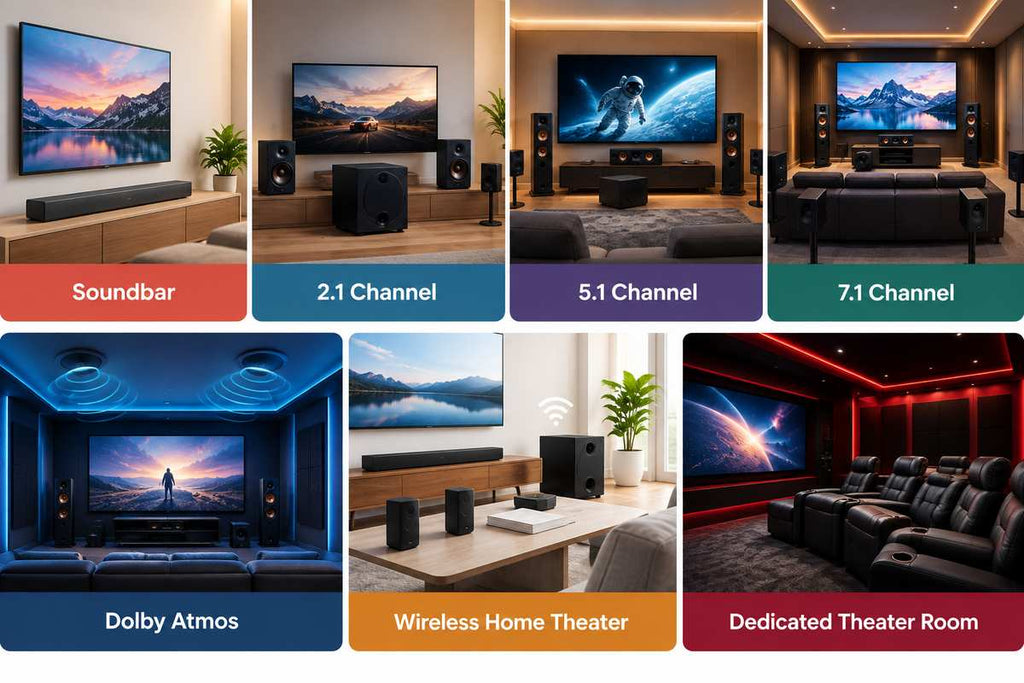
For example, you could begin with a 5.1 system and later add height speakers if your room and AV receiver support Dolby Atmos.
How Much Does a Cinema Like Sound System Cost?
The cost depends on the room, equipment, number of speakers, installation requirements, and level of performance you want.
A basic home theater can provide a clear improvement over TV speakers without requiring a very large investment. More advanced systems with larger speakers, powerful subwoofers, multiple surround channels, Dolby Atmos, acoustic treatment, and professional installation will cost more.
Instead of buying every component at once, it can be better to plan the complete system first and then build it in stages.
This also allows you to spend more on the components that matter most for your room and listening needs.
Final Thoughts
Getting cinema hall like sound effects at home is about more than simply buying loud speakers. A good experience comes from combining the right speakers, a suitable AV receiver, a capable subwoofer, proper placement, room acoustics, good quality movie audio, and careful calibration.
You do not need to copy a commercial cinema exactly. The best home theater is one that is designed around your room, seating, viewing habits, and budget.
If you are planning a home theater and need help choosing the right combination of speakers, AV receivers, subwoofers, projectors, and other equipment, Melody Home Theater Store can help you plan a setup that fits your space and requirements. With decades of experience in home audio and video, Melody can help create a home theater that brings a more immersive cinema experience into your home.
Related post

30
Sep