

Dolby 5.1 vs 7.1 Which Home Theatre System Is Better?
Choosing the right home theatre system can make a big difference in how you enjoy movies, music, sports, and games at home. When looking for a surround sound system, two common options are Dolby 5.1 and Dolby 7.1. But what is the difference between them, and which one is better for your home?
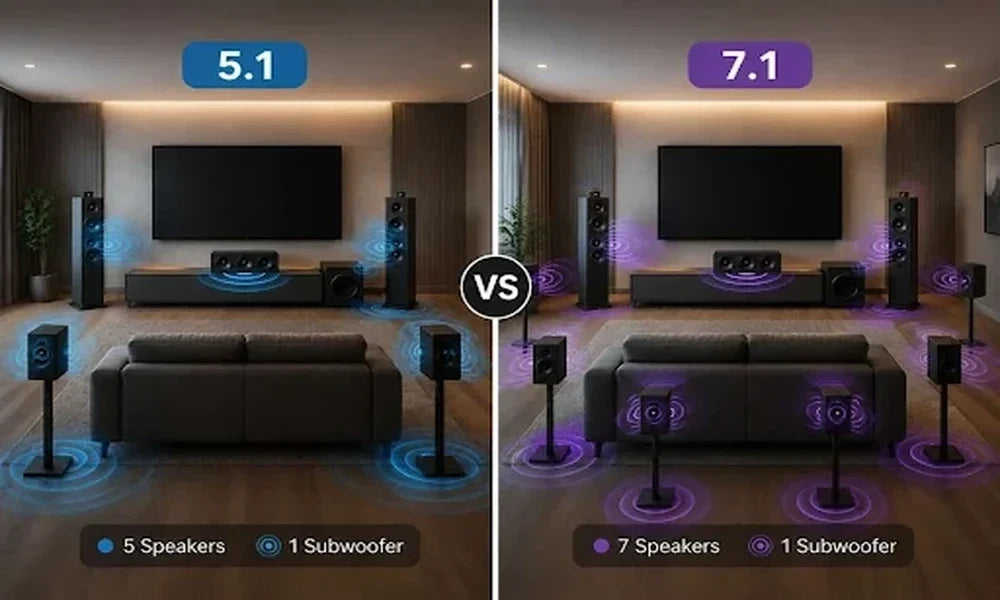
Both systems are designed to create surround sound by placing speakers around the listener. The main difference is the number of speakers used for surround effects. A 5.1 system has five main speakers and one subwoofer, while a 7.1 system has seven main speakers and one subwoofer.
While a 7.1 system has more speakers, that does not always mean it is the better choice. Your room size, seating position, budget, equipment, and listening preferences all play an important role.
What Is a Dolby 5.1 Home Theatre System?
Dolby 5.1 is one of the most popular surround sound configurations for home theatres. The number “5” represents five main audio channels, while “.1” represents the subwoofer channel.
A typical 5.1 home theatre system includes:
• Left front speaker
• Centre speaker
• Right front speaker
• Left surround speaker
• Right surround speaker
• One subwoofer
The centre speaker is mainly responsible for dialogue, making voices clear and easy to understand. The front left and right speakers create the main soundstage, while the surround speakers add effects from the sides or rear of the listening area.
The subwoofer handles low-frequency sounds such as explosions, bass, thunder, and powerful music effects.
One of the biggest benefits of a 5.1 system is that it provides an immersive experience without requiring too many speakers. It is also easier to install and works well in many living rooms and medium-sized spaces.
A 5.1 setup can be a good option if you want:
• A simple surround sound experience
• A home theatre for a small or medium room
• Easy speaker placement
• Lower installation complexity
• A balanced system for movies, television, music, and gaming
For many homeowners, a well-designed 5.1 system provides more than enough surround sound for everyday entertainment.
What Is a Dolby 7.1 Home Theatre System?
Dolby 7.1 builds on the 5.1 configuration by adding two extra surround speakers. Instead of five main speakers, a traditional 7.1 setup uses seven main speakers along with one subwoofer.
A typical 7.1 system includes:
• Left front speaker
• Centre speaker
• Right front speaker
• Left surround speaker
• Right surround speaker
• Left rear surround speaker
• Right rear surround speaker
• One subwoofer
The additional rear speakers help create more separation and a wider surround sound experience. This can make sound effects feel more natural as they move around the room.
For example, during an action movie, you may hear a vehicle moving from the front of the room toward the rear. The additional surround channels can help create a smoother transition between different areas of the room.
A 7.1 system is generally more suitable for larger rooms where there is enough space behind the seating position for proper speaker placement.
It can be a good choice for:
• Dedicated home theatre rooms
• Larger living rooms
• Movie enthusiasts
• Gaming setups
• People who want a wider surround sound experience
However, a 7.1 system requires more speakers, more space, and usually a higher investment.
Dolby 5.1 vs 7.1: What Is the Difference?
The main difference between Dolby 5.1 and 7.1 is the number of surround channels. A 5.1 system has two surround speakers, while a 7.1 system adds two rear surround speakers.
This difference can affect the overall soundstage and immersion.
Here are the key differences:
• Number of speakers: 5.1 uses five main speakers and one subwoofer. 7.1 uses seven main speakers and one subwoofer.
• Sound coverage: 7.1 can provide greater surround coverage because of the additional rear speakers.
• Room size: 5.1 works well in smaller and medium rooms, while 7.1 generally benefits from larger rooms.
• Installation: 5.1 is easier to position and set up.
• Cost: 7.1 can cost more because it requires additional speakers and equipment.
• Immersion: 7.1 can create a wider sound field when the speakers are positioned correctly.
However, having more speakers does not automatically mean better sound. Speaker quality, room acoustics, placement, calibration, and the AV receiver can have a major impact on the final result.
A high-quality 5.1 system that is correctly installed can sound better than a poorly positioned 7.1 system.
Which System Is Better for Your Home?
The best choice depends on your room and how you plan to use your home theatre.
For a smaller living room, 5.1 is often the more practical option. It provides strong surround sound while taking up less space. It is also easier to position the speakers around the main seating area.
If you have a larger room or a dedicated home theatre, 7.1 can be a better choice. The extra speakers can provide better separation and make the sound feel more spacious.
Your seating position is also important. If your sofa is placed directly against the back wall, there may not be enough room for rear surround speakers. In such cases, a 5.1 system may provide a cleaner and more effective setup.
You should also think about the content you watch and listen to.
A 5.1 system can be ideal for:
• Regular movies and TV shows
• Sports
• Streaming content
• Music
• Everyday entertainment
A 7.1 system can be useful for:
• Action movies
• Large-scale cinema content
• Gaming
• Concerts
• Dedicated home theatre rooms
Your AV receiver should also support the configuration you choose. It is important to select a receiver that can properly handle your speakers and provide the required audio processing.
Which Home Theatre System Should You Choose?
There is no single answer to whether 5.1 or 7.1 is better. The right system depends on your individual requirements.
Choose a 5.1 home theatre system if you want a simple, powerful, and practical surround sound setup. It is especially suitable for small and medium-sized rooms and offers an excellent balance between performance and cost.
Choose a 7.1 home theatre system if you have more space and want additional surround speakers for a wider sound experience. It can be a great option for dedicated home cinema rooms and larger entertainment spaces.
It is also important to focus on the complete system rather than only the number of speakers. Good front speakers, a clear centre speaker, a capable subwoofer, a suitable AV receiver, and correct speaker placement are all important.
Room calibration can also improve the final experience by helping the receiver balance the sound according to your room.
Conclusion
When comparing Dolby 5.1 vs 7.1, both systems can deliver an enjoyable home theatre experience. A 5.1 system is easier to install, works well in smaller spaces, and offers excellent surround sound for most everyday entertainment. A 7.1 system adds two more surround speakers and can provide a wider and more immersive experience in larger rooms.
The best option depends on your room size, seating arrangement, budget, equipment, and entertainment needs.
If you are planning to build or upgrade your home theatre, Melody House can help you choose the right speakers, AV receivers, projectors, and other home theatre equipment. With extensive experience in home audio and video solutions, Melody House Chandigarh can help you create a setup that fits your space and delivers an enjoyable cinema-like experience at home.
Related post


08
Oct


